How augmented reality will become a lynch-pin of future advertising
Advertising has enhanced itself by changing from advertising a product to advertising an experience. It used to be a one-way communication on the T.V. As per survey, advertisers have now got three seconds to grab someone’s attention before they get distracted.

Human beings are visual creatures. Studies have indicated that humans process visuals 60,000 times faster than text. This makes users engage with visual data more than any other form of data. The amount of visual data consumed in the past few years would easily surpass the amount of textual content consumed in the past century. Augmented Reality, which is both visual and textual in nature has the capability to heighten user engagement. It has a magnetic pull that will both amuse users and also hook them to the content.
Augmented Reality can be defined as the ability to add digital elements in order to perceive a live experience with the help of a camera. It may or may not interact with the elements in the live experience. The presence of a live view differentiates it from Virtual Reality. Augmented reality is the next Big Things in marketing, ecommerce and advertising and coupled with AI in ecommerce, it is ready to change the shape of this segment. With augmented reality, advertisers can deliver contextual information in easily understandable format that have high recall value.
From leveraging stunt-like experiences such as elephants walking right next to you, T-Rex running behind you in shopping mall or even orcas jumping out of water, this innocent looking screen serves as a scarily almost realistic cover to bring these scenarios to life.
AR can help bridge the gap between personalisation and care. Brands need to think about how they can help people, entertain them or give them information that they didn’t have previously.
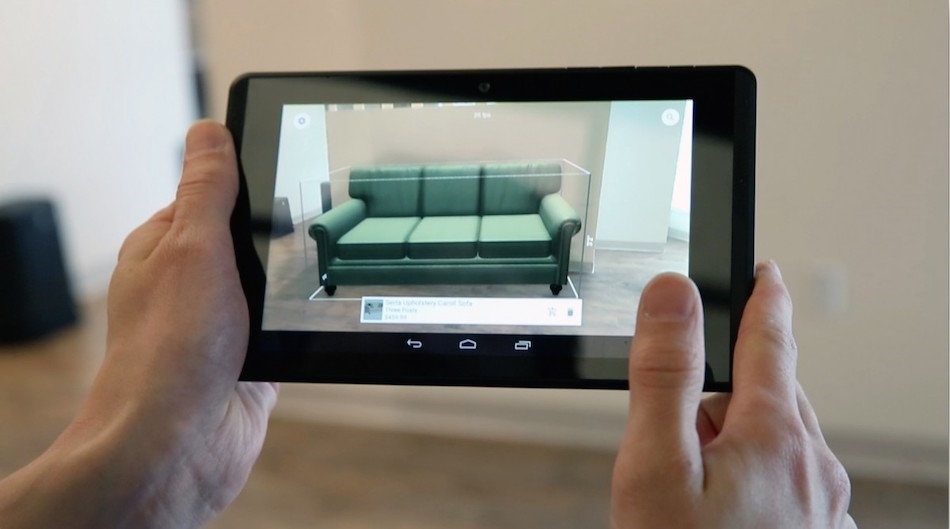
Advertisers look at using augmented reality as part of a marketing drive in order to attract new customers as well as retain existing customer base. It particularly means developing an in-depth knowledge about the particular segment of customers; what is their identity, what is their requirement and why they need it. That knowledge leads to understanding their consuming habits and the triggers for buying. Consumers are always open to augment their world with more offers and information. Augmented reality encapsulates large chunks of information into tiny snippets that are visually easy to see and understand. For example, you can point your smartphone camera at a restaurant and get instant updates about star ratings, customer reviews, and much more.
The prime purpose of advertising is to provide contextual information. Without contextual information, any advertising is meant to lose relevance. The expense of pulling off an Augmented Reality campaign fades in comparison to traditional print or broadcast advertising and establishes a longer-lasting, deeper connection with your consumers via an emotional connection, which in the end converts to repeat business and sales.
The expense required in creating an Augmented Reality campaign fades in comparison to traditional print or broadcast advertising and establishes a longer-lasting, deeper connection with your consumers via an emotional connection, which in the end converts to repeat business and sales.
Programmatic advertising where automatic buying of ads happens on a real-time basis is expected to touch 57.36 Billion USD in 2019. After all, if you are a marketer you would want to capitalize on the ongoing mad rush of media consumption.
Immersive Media Experience: Augmented reality forms part of the mixed reality, a suite of technologies that bridge the gap between physical and digital worlds. It gives users an immersive experience that gives them digital experiences in a real-world physical environment.
Innovation: AR is offering a one of its kind approaches by a destination marketing group, the first of its kind, to use augmented reality to change consumer’s perception. Whenever the industry catches on, nobody else will have been first, and whoever in their segment chose an AR advertising will be looked at as innovators.
Inexpensive: Print advertising in magazines is significantly more expensive than online or digital ads. They are sold with respect to the page area in which the advertisement needs to be covered.
Emotional Connection: AR takes marketing strategies to a more immediate and sensory level with customers, allowing greater interactivity with the target audience providing them with an experience. AR can create an emotional connection between what the buyer is searching for and what the product can offer. It gives the product a unique personal feel which consumer can picture it in their own world.
Driving Sales: At the end of the day, it comes down to return of investment on any campaign. The key involved in developing successful AR campaigns is to provide customer engagement as well as translate to sales while creating unforgettable experiences for the customer using them. AR brings customer experiences which translate to online sales by enhancing the experience and driving brand visibility.
The Future of Augmented Reality in Marketing
Augmented Reality rose into existence in advertising and marketing begun with the advancement in technological infrastructure. Companies have continued to adapt the AR technology and push forward this technology to provide a unique experience for their products and services to the end-consumer.
The shift towards ecommerce proves to be a more natural shift in technological advancement as it integrates both the web development and visual stimuli in advertising. This also serves as a psychological tactic to remove the barrier of fantasy in the mind of a buyer.
VR applications have also been excelling in the same AR targeted industries. The difference here is that VR will most often be used with products where the experience can only be derived in a specific and custom environment. Adaptations and minor variations in required environment can hamper the overall VR experience.
It is a fact that companies that invest in augmented reality in marketing, reap the benefits of viewing the world in a new dimension while also enjoying the fruits of their investment.
Final Thoughts
The success of an advertisement can be measured in three ways. First, the initial reaction it creates in the target audience. Second, the prolonged attention it manages to receive from users. Third, attention turning into a strong emotion to make a purchase. And AR has the capability of encompassing and invoking all of these reactions.